
Synthetic fibers now dominate over 54% of global textile production. This shift isn’t just a temporary trend; it’s a fundamental change in how the professional apparel industry views performance. If you’re scaling a brand in 2026, mastering polyester shirts is no longer optional. However, moving from traditional cotton to high-utility synthetics often brings technical anxiety. You might worry about fabric melting during heat pressing or feel frustrated by inconsistent bulk pricing for performance wear.
We understand these logistical hurdles. You need predictable results and clear ROI to maintain your margins on high-volume projects. This guide provides the technical clarity required to source and decorate performance blanks with confidence. You’ll learn how to identify the best brands for sublimation, understand the science behind moisture-wicking terminology, and secure wholesale pricing strategies. We will also examine the latest 2026 industry standards for recycled content and decoration compatibility to keep your brand’s supply chain efficient and reliable.
Key Takeaways
- Modern manufacturing has evolved beyond “slick” synthetics to create “soft-hand” finishes that mimic the comfort of cotton while maintaining superior moisture-wicking properties.
- Successful decoration on performance blanks requires specialized low-bleed inks and precise temperature control to prevent dye migration and fabric melting.
- Choosing polyester shirts for bulk orders ensures long-term colorfastness and high tensile strength, making them more durable than organic alternatives in high-activity environments.
- Strategic wholesale sourcing relies on leveraging tiered pricing structures and evaluating vendor stock depth to protect your margins on high-volume projects.
Understanding Polyester Shirts: The Science of Synthetic Performance
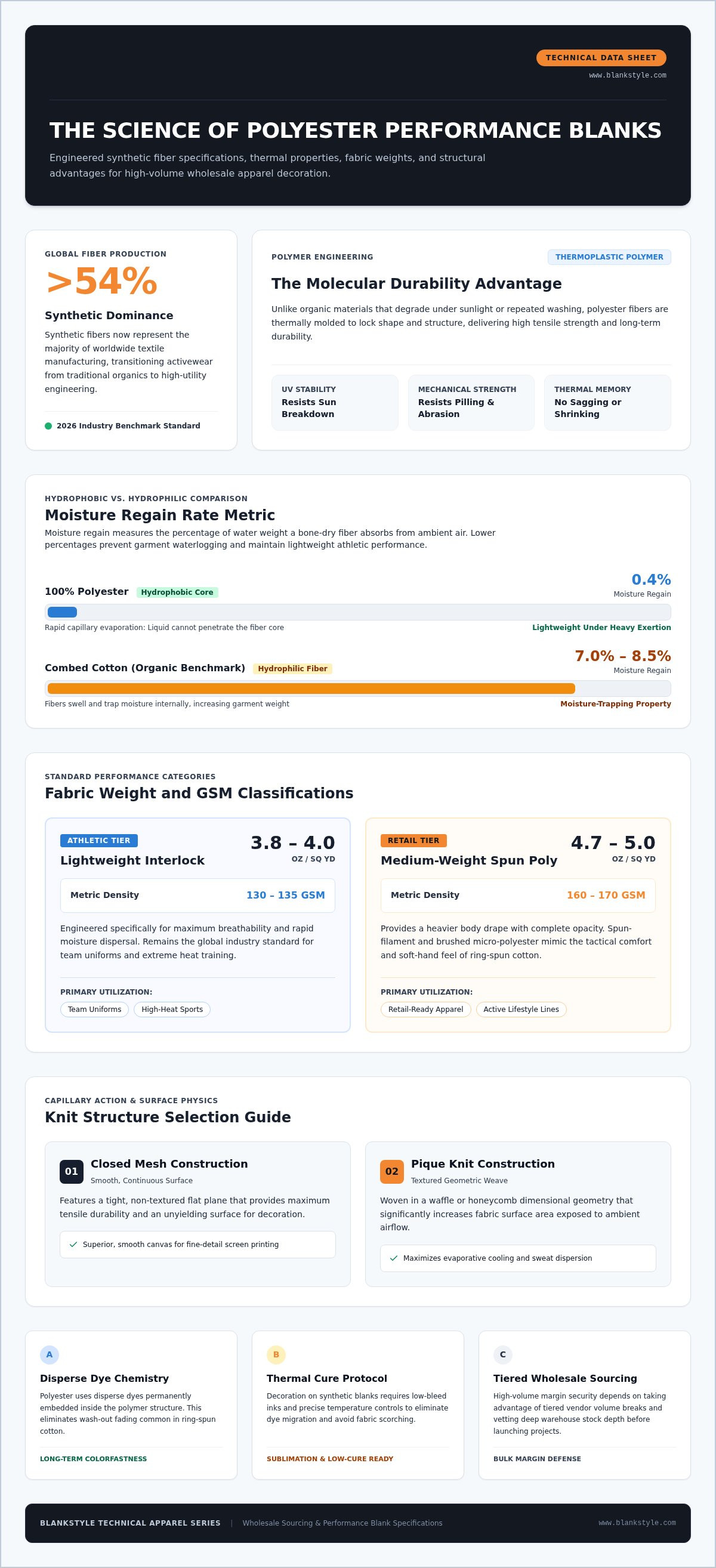
Polyester is a petroleum-based synthetic fiber engineered for high tensile strength and long-term durability. In the 2026 apparel market, it accounts for over 54% of total global fiber production. This dominance isn’t accidental. Manufacturers have moved past the “shiny” textures of the past to develop “soft-hand” polyester shirts that mimic the feel of combed ring-spun cotton. By using spun-filament yarns and brushed micro-polyester, modern garments provide the tactical comfort of a natural fiber while retaining the industrial-grade performance required for activewear and high-volume workwear programs.
Beyond comfort, these fabrics offer inherent UV resistance and thermal stability. This makes them an essential canvas for brands that prioritize longevity. Unlike organic fibers that degrade under consistent sun exposure or repeated washing, polyester maintains its structural integrity. It resists pilling and abrasions, ensuring that the garment looks professional even after months of heavy use in demanding environments.
The Molecular Advantage: Why Polyester Lasts
The durability of this material stems from the chemical structure of synthetic polyester fibers. Unlike organic materials, polyester is thermoplastic. This means it can be heated and molded to hold a specific shape, a property that ensures garments resist stretching, sagging, or losing their fit after repeated laundry cycles. Polyester is a hydrophobic fiber that facilitates rapid moisture evaporation. Its moisture regain rate is a mere 0.4%, which is significantly lower than cotton’s 7.0% to 8.5%. This technical gap ensures the fabric stays light and dry during high-intensity use, as moisture cannot penetrate the core of the fiber.
Modern Fabric Weights and GSM
Selecting the right blank requires an understanding of Grams per Square Meter (GSM) and imperial ounce weights. Most performance apparel falls into two primary categories:
- Lightweight Interlock (3.8 to 4.0 oz / 130-135 GSM): These are designed for maximum breathability and rapid drying. They’re the industry standard for team sports uniforms and high-heat environments.
- Medium-weight Spun Poly (4.7 to 5.0 oz / 160-170 GSM): These offer a more substantial feel and better opacity. They’re frequently used for retail-ready apparel that needs to look like cotton but perform like a synthetic.
While these synthetics offer excellent strength-to-weight ratios, brands looking for maximum thickness for streetwear applications might still compare these against traditional heavyweight t-shirts to determine the best fit for their specific project goals. In 2026, the thermal stability of polyester makes it the most reliable choice for modern decoration techniques, ranging from sublimation to low-cure screen printing systems.
Performance Benefits: Why Brands Choose Polyester Blanks
Brands transition to 100% polyester because of its superior performance-to-cost ratio in active and professional environments. Unlike organic materials, these fabrics don’t absorb moisture; they move it. Understanding the difference between cotton and polyester is critical for high-volume sourcing. While cotton fibers swell and trap liquid, polyester remains hydrophobic. This ensures the garment stays lightweight even during heavy exertion. To see how these technical synthetic materials are engineered for high-intensity court sports, discover Pulco Studios and their specialized padel collections. For apparel retailers, this translates to a product that maintains its retail value through better colorfastness and structural stability.
Color retention is another primary driver for wholesale selection. Polyester uses disperse dyes that are physically trapped within the polymer chain. This prevents the “washed-out” look common in aged cotton garments. Additionally, the thermoplastic nature of the fiber provides inherent wrinkle and shrink resistance. These polyester shirts emerge from industrial dryers ready for the shelf, reducing the need for post-production steaming or pressing.
Moisture Management and Thermoregulation
The core of performance apparel is capillary action. Polyester fibers are engineered to pull sweat away from the skin and push it to the fabric’s surface for rapid evaporation. This process is enhanced by the specific knit of the garment. Brands typically choose between two primary structures:
- Closed Mesh: A smooth, flat surface that offers excellent durability and a superior canvas for screen printing.
- Pique Knit: A textured, geometric weave that increases surface area and improves airflow for maximum cooling.
This technical moisture management makes these blanks the standard for corporate wellness programs and athletic teams. If you’re planning a large-scale uniform rollout, you can browse wholesale performance blanks to compare these technical features side-by-side.
Longevity and Retail Value
Wholesale buyers prioritize replacement cycles. In 2026, modern manufacturing has largely solved the issue of fabric pilling. High-quality performance brands like Sport-Tek utilize singeing and specialized finishes to ensure a smooth surface that resists friction damage. This durability significantly lowers the replacement rate for employee uniforms and team gear, providing a better long-term ROI for the end user.
Odor management has also seen significant upgrades. Modern polyester shirts often feature integrated antimicrobial treatments. These mechanical finishes inhibit the growth of odor-causing bacteria that typically thrive in synthetic fibers. By addressing “permastink” at the mill stage, manufacturers have made polyester a viable option for daily-wear professional apparel, not just short-term athletic use.
Polyester vs. Cotton: A Strategic Comparison for Bulk Orders
Sourcing for 2026 requires balancing lifestyle aesthetics with functional utility. While cotton remains a staple for retail-focused brands, polyester shirts offer a level of stability that organic fibers can’t match. Cotton is a commodity prone to price volatility based on crop yields and climate factors. Polyester provides a consistent cost basis for high-volume logistics. Choosing between them depends on the end-use environment. Cotton excels in casual, low-moisture settings, but it fails in high-intensity applications where sweat and sun exposure lead to heavy, faded garments.
Brands must adhere to FTC textile labeling requirements when disclosing fiber content. This is essential when navigating the “middle ground” of blended fabrics. CVC (Chief Value Cotton) blends, usually 60% cotton and 40% polyester, provide the breathability of cotton with the wrinkle resistance of a synthetic. Tri-blends add rayon to the mix, creating a soft drape that 100% polyester or cotton lacks. These blends offer a strategic compromise for brands that need performance features without losing a traditional retail feel.
The environmental conversation has also evolved. By late 2026, most wholesale lines utilize recycled polyester (rPET). Under Global Recycled Standard (GRS) v5.0, products must contain at least 20% recycled content to qualify for certification. Organic cotton provides a natural alternative, but it often lacks the tensile strength required for long-term professional use. Recycled synthetics offer a circular solution that maintains the high-performance attributes of virgin polyester.
The Comfort vs. Utility Debate
Combed cotton is praised for its “hand-feel,” but modern micro-polyester has closed the gap. High-performance brands now prioritize utility for active lines. Cotton absorbs sweat, becomes heavy, and causes chafing. Micro-polyester remains light and slick against the skin. For a deeper look at material selection and vendor evaluation, see our Ultimate Guide to Sourcing Wholesale Blank T-Shirts.
Cost-Benefit Analysis for Wholesale Buyers
Logistics costs are a major factor in bulk orders. Polyester fibers are lighter than cotton. This reduces the total shipping weight of a case, lowering your landed cost per unit. Synthetic markets also offer better price stability. While cotton prices fluctuate with global trade policies, polyester remains predictable. Brands like Gildan provide budget-friendly polyester options that maximize margin for high-volume projects without sacrificing basic performance needs.
Decoration Compatibility: Printing and Embroidery on Polyester
Decorating synthetics requires a departure from standard cotton-based techniques. Polyester shirts are heat-sensitive. Applying excessive heat during the curing or pressing phase can lead to “glazing” or scorching the fabric surface. To maintain the integrity of the synthetic weave, you must manage temperature thresholds with precision. While these fabrics present challenges, they also offer the most durable and vibrant decoration opportunities in the apparel industry when handled with the correct technical parameters.
Sublimation remains the gold standard for 100% white polyester. This process uses heat to turn ink into a gas, which then bonds with the polymer fibers. The result is a permanent, full-color print that’s part of the fabric itself. It’ll never crack or peel because there’s no ink layer sitting on top of the garment. For brands that need complex, high-definition graphics, this method provides the highest retail value and longevity.
The Sublimation Advantage
The gas-phase dye process makes sublimation uniquely profitable. Because the ink integrates into the fiber, the garment’s breathability and moisture-wicking properties remain completely intact. This is critical for performance lines where a heavy screen print would block airflow. If you’re managing a large-scale project, our Custom Screen Printing Services guide provides additional technical support for choosing the right method for your specific blank.
Avoiding Dye Migration
Dye migration is the movement of fabric dye into printed ink during the curing process. This is why white ink often turns pink when printed on red polyester. Standard plastisol inks cure at 320°F, which is high enough to gasify the disperse dyes in the fabric. To prevent this, you must use low-cure ink systems that flash and cure between 260°F and 280°F. Keeping the garment temperature below the 300°F threshold is the only way to ensure color accuracy and prevent bleeding.
Embroidery on lightweight polyester shirts also requires specialized stabilization. The high elasticity of a 3.8 oz interlock fabric can lead to puckering if you use standard backing. We recommend a 2.5 to 3.0 oz heavy-cutaway backing paired with size 70/10 or 65/9 ballpoint needles. This combination prevents the fabric from shifting and ensures the needle doesn’t cut the synthetic filaments. For heat transfer vinyl (HTV), always select “low-temp” films specifically designed for performance wear to avoid scorching the garment. Brands expanding their synthetic outerwear programs should also review the decoration challenges covered in our professional buyer’s guide to wholesale zip up hoodies, where split front seams and zipper engineering create similar technical considerations for decorators.
Ready to start your next project? You can get an instant quote for custom decoration on our full catalog of performance blanks.
Wholesale Sourcing: How to Buy Polyester Shirts in Bulk
Sourcing polyester shirts at scale requires a focus on logistical reliability and stock depth. In a high-volume industry, a vendor’s ability to maintain inventory is just as critical as the per-unit price. When evaluating wholesale partners, prioritize those with transparent shipping speeds and clear return policies. For instance, a 60-day return policy provides a necessary safety net for large-scale production runs. Efficient logistics ensure your project stays on schedule, especially when managing tight deadlines for athletic seasons or corporate events.
Sample ordering is a non-negotiable step for professional decorators. Before committing to a 500-unit run, you must test for “dye-ability” and heat sensitivity. As established in previous sections, the risk of dye migration is high with synthetics. Testing a single blank with your specific ink system or sublimation setup prevents costly errors and fabric waste. This proactive approach protects your margins and ensures the final product meets your brand’s quality standards.
Volume Pricing and Profit Margins
Profitability in the apparel business is often won or lost at the sourcing stage. Utilizing tiered pricing structures allows you to scale your brand effectively. As your order volume increases, your per-unit cost drops, directly increasing your retail margin. This is particularly effective for recurring uniform programs where demand is predictable. If you’re looking for performance uniform ideas beyond standard tees, you can explore our guide to wholesale polo shirts for 2026.
Logistical costs also impact your bottom line. Leveraging free shipping on orders over $69 helps maintain margins on smaller restocks or mid-season add-ons. For high-volume brands looking to reduce overhead, drop-shipping solutions allow you to move product directly to your customers or decorators without holding physical inventory. This lean approach to logistics is essential for maintaining agility in a fast-moving market.
Selecting the Right Brand
Brand consistency is vital for long-term customer satisfaction. When sourcing polyester shirts, you must choose a brand that aligns with your market position. We specialize in industry leaders that offer distinct advantages:
- Sport-Tek: The primary choice for athletic-focused lines. They offer proprietary PosiCharge technology to lock in color and prevent bleeding during decoration.
- Gildan: A value-focused powerhouse. Their performance line provides a cost-effective entry point for promotional events and large-scale giveaways.
Choosing a stable brand ensures that when you reorder six months from now, the fit, color, and fabric weight will remain identical. Ready to scale your inventory? Browse our full collection of polyester shirts and start your bulk order today.
Scaling Your Performance Apparel Brand in 2026
Mastering the technical nuances of performance synthetics is the key to maintaining high retail margins. From managing dye migration with low-cure inks to leveraging the permanent vibrancy of sublimation, your choice of decoration must align with the fabric’s molecular structure. Sourcing polyester shirts at scale also requires a logistical partner that understands the demands of high-volume production. Reliability in stock depth and pricing consistency ensures your brand remains agile in a competitive market.
Blankstyle provides the infrastructure needed to support your growth. We offer bulk tiered pricing to maximize your per-unit profitability and free shipping on all orders over $69. Our 60-day hassle-free return policy allows you to source with complete confidence. Whether you’re restocking athletic lines or launching a new corporate uniform program, we have the inventory and technical expertise to streamline your supply chain.
Shop Wholesale Polyester Shirts at Blankstyle and elevate your performance apparel projects today. Success in this industry is built on consistent quality and logistical efficiency. We look forward to helping you reach your next production milestone.
Frequently Asked Questions
Can you screen print on 100% polyester shirts?
Yes, you can screen print on 100% polyester shirts, but you must use specialized low-bleed inks. Unlike cotton, polyester is heat-sensitive and prone to dye migration. To prevent bleeding, printers use inks that cure at lower temperatures, typically between 260°F and 280°F. This keeps the garment surface below the gas-activation threshold of the fabric’s disperse dyes, ensuring your white prints remain crisp and bright on dark backgrounds.
What is the best type of polyester shirt for sublimation?
The best option for sublimation is 100% white polyester with a smooth surface. This fiber content ensures maximum color saturation because the dye bonds directly with the polymer filaments. While 65/35 blends work, they result in a faded or “vintage” appearance. For professional results, choose a high-quality interlock or jersey knit blank. These fabrics provide the consistent surface required for high-definition, full-color graphics that won’t peel or crack.
Do polyester shirts shrink in the dryer?
These garments are highly resistant to shrinking. Because polyester is a thermoplastic fiber, it’s heat-set during the manufacturing process to maintain its dimensions. Unlike cotton fibers that swell and contract, synthetic filaments remain stable even after repeated high-heat drying cycles. This makes polyester shirts an ideal choice for high-volume uniform programs where size consistency and long-term durability are critical for the end user.
Why do some polyester shirts smell after a workout?
Synthetic fibers are naturally oleophilic, meaning they attract and hold onto oils like body sebum. These oils trap odor-causing bacteria within the fabric’s structure. While cotton absorbs water, polyester holds onto lipids that don’t easily wash away in standard laundry cycles. To combat this, many modern wholesale blanks feature integrated silver-ion or zinc-pyrithione antimicrobial finishes that mechanically inhibit bacterial growth and prevent permanent odors.
Is polyester or cotton better for hot weather?
Polyester is superior for high-activity heat, while cotton is often preferred for stationary dry heat. Polyester’s low moisture regain rate of 0.4% ensures it doesn’t hold sweat, allowing for rapid evaporation and cooling. Cotton absorbs moisture, which can lead to a heavy, damp garment that causes chafing. For professional athletic teams or outdoor workers, synthetics provide the thermoregulation necessary to maintain comfort and performance during physical exertion.
What is the difference between polyester and moisture-wicking fabric?
Polyester is the raw synthetic fiber, while moisture-wicking refers to a specific performance capability. Not all polyester is engineered to wick moisture; some basic weaves can feel stifling. Wicking is achieved through the physical shape of the fiber, such as trilobal filaments, or through chemical finishes applied at the mill. These treatments use capillary action to pull liquid away from the skin and move it to the fabric surface for rapid drying.
How do I prevent dye migration when printing on dark polyester?
Preventing dye migration requires a combination of low-cure ink systems and barrier layers. On dark fabrics, printers often use a grey or black “blocker” ink as an underbase. These inks contain activated carbon to trap gasified dyes before they reach the top color layers. It’s critical to monitor your dryer temperature with a donut probe to ensure the garment surface never exceeds 300°F, which is the point where most disperse dyes begin to sublimate.