
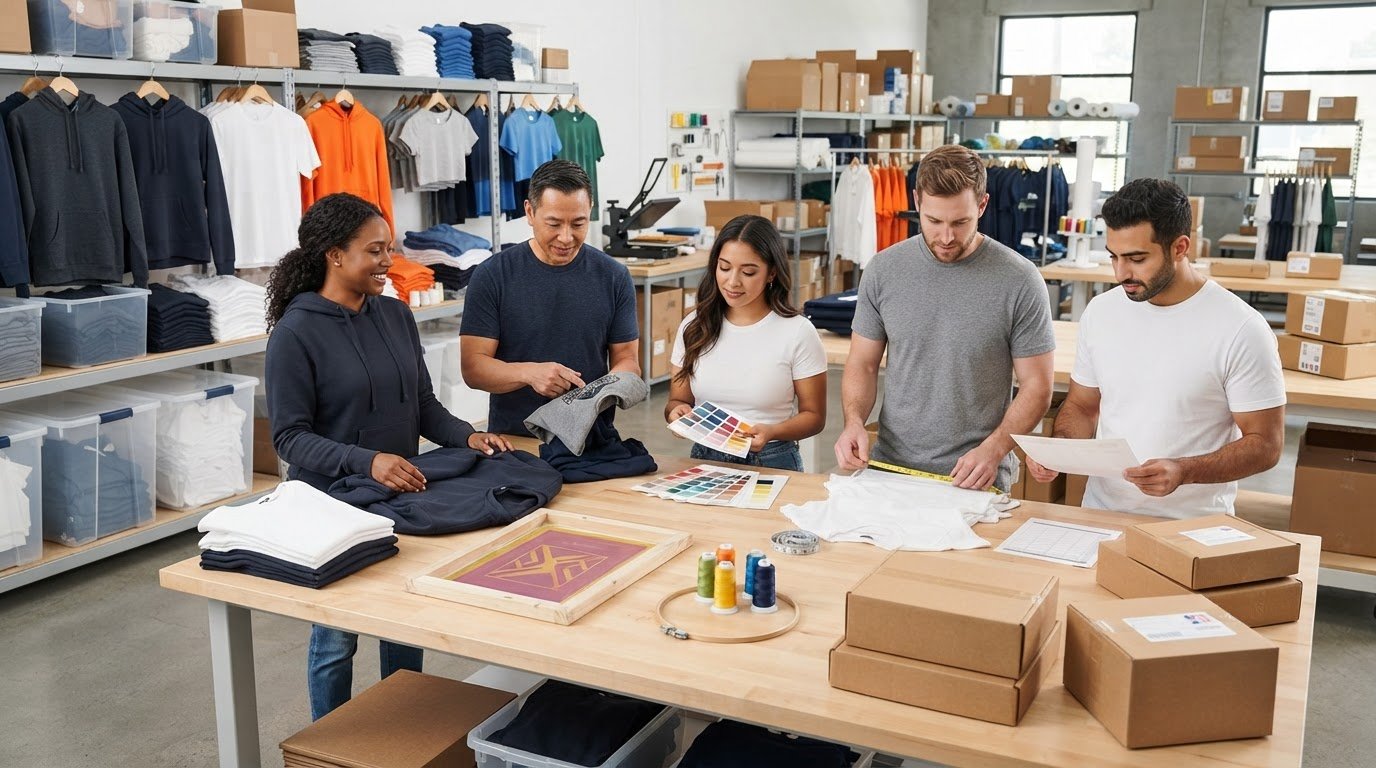
What makes a custom merchandise printing bulk order work? It’s not just the artwork. The garment, decoration method, quantity, and fulfillment plan all need to fit the project. Choosing each in isolation can lead to inconsistent sizing, a design that doesn’t suit the fabric, or extra inventory without a clear use.
A practical plan starts with how people will use the merchandise, then matches the garment and decoration to that purpose. This guide covers how to compare screen printing and embroidery, choose garment styles, prepare an order brief, and plan quantities and fulfillment. Blankstyle brings wholesale blank apparel together with custom screen printing, embroidery, drop shipping, and an instant quote tool to help you move from project details to an order plan.
Key Takeaways
- Plan custom merchandise printing bulk orders around the project’s purpose, audience, and how the garments will be used.
- Compare screen printing and embroidery based on the artwork and garment, then choose the method that fits the look you need.
- Use the garment style and decoration together to narrow choices for T-shirts, hoodies, and crop tops.
- Gather artwork, size counts, color preferences, quantities, and fulfillment details before preparing your order.
- Coordinate wholesale blanks, decoration, and drop shipping, then use your specifications with the instant quote tool.
What Does Custom Merchandise Printing in Bulk Involve?
Bulk custom merchandise is a coordinated order of decorated garments planned for a shared project, audience, or purpose. It brings together garment choices, artwork, decoration, quantities, sizes, colors, and fulfillment needs. Planning these details as one order helps maintain consistency and gives you a clearer picture of what the project requires.
Organizations use custom apparel to promote a brand, outfit an event, build team identity, or create products for resale. The right choices depend on who will wear the garments and how they’ll use them. Staff apparel should suit regular work use, while event giveaways need to fit the audience and distribution plan. Similarly, teams outfitting corporate functions or hospitality venues often look to suppliers like personalisedglasses.com.au for custom drinkware to complement their apparel. Merchandise for resale should reflect the brand and the preferences of its intended customers.
A ready-made custom pack can simplify a straightforward order by grouping a garment and decoration into a preset option. Project-specific sourcing gives you more flexibility to match the blank garment and decoration to your audience and use. For custom merchandise printing bulk projects, the key is to plan the garment, artwork, and decoration together, rather than focusing only on the number of pieces.
Which projects benefit from custom merchandise printing?
Company events, creator merchandise, school groups, and retail brands all use coordinated apparel, but each project has different requirements. Staff garments may need to work for regular wear and be easy to identify. Promotional giveaways should suit the event audience and distribution plan. Creator and retail brands may prioritize garments that fit their brand and appeal to customers beyond a launch, similar to how specialized athletic labels like Team Industry curate gear and apparel tailored to their community.
Start with the wearer and setting. Decide whether the garment is for work, a single event, group activities, or resale. A school group ordering wholesale blank T-shirts, for example, can plan a size range that accommodates students and adults. The intended use helps narrow the garment and decoration choices before you finalize the artwork.
What makes a bulk order different from a one-off custom shirt?
A one-off shirt can be planned for one person. A bulk run needs shared specifications so the garments feel like part of the same order. Keep the artwork, placement, garment choice, and color plan consistent across the run. If different groups need variations, label each version and record its quantity separately.
Plan quantities and sizes together. Collect size counts, then break them down by garment color and artwork variation. This helps match the order to the people expected to receive the garments and gives the decoration plan a clear foundation. For background on the process, see What is Screen Printing?
Tiered bulk pricing means larger quantities can have lower per-unit costs. Compare the total quantity with the sizes and garment options the project actually needs. A larger run may change the unit economics, but ordering extra without a distribution or resale plan can leave you with unused inventory. Set the audience and use first, then plan quantities around them.
How Screen Printing and Embroidery Work for Bulk Merchandise
Screen printing and embroidery decorate garments in different ways. Screen printing transfers a design onto the garment as a printed graphic. Embroidery recreates a design with stitches in the fabric. Printing applies artwork to a garment’s surface, while embroidery builds the design with thread.
For custom merchandise printing bulk orders, assess the artwork, garment material, placement, and number of design colors together. A bold graphic repeated across a run may suit screen printing. A logo or short text that works in stitched form may suit embroidery. Garment weight and surface also affect how the decoration looks and sits, so avoid choosing a method based on appearance alone.
Consider the finished piece. A large front graphic and a compact logo have different space and detail requirements. Designs with several colors or fine elements also need different planning from simple text. Prepare the artwork and placement preferences early to clarify the order requirements and support a useful quote.
When does screen printing suit a bulk merchandise design?
Screen printing is worth considering for repeatable graphics across coordinated apparel orders. It can suit matching event shirts or branded team apparel when the same artwork will appear on many garments. The number of colors and print locations can affect project pricing, so note whether the design will go on the front, back, sleeve, or more than one location.
Prepare the artwork and specify its placement before requesting a quote. Include the garment type, design colors, and print locations so the project can be assessed as a complete run. If you’re considering heavyweight T-shirts, include that choice in your order details.
When does embroidery make sense for custom apparel?
Embroidery uses stitches to create logos and text that suit a thread-based treatment. Stitch count is one factor used to calculate embroidery fees, so the design’s size and detail matter. Fine lines and very small lettering can be harder to represent clearly in stitches. Simplifying artwork can help it translate more effectively to the chosen placement.
Consider garment weight and construction before choosing a location. The garment’s surface and structure affect how the stitched design sits. A small chest logo, for example, has different space requirements from a larger design. Plan the garment, artwork, and preferred placement together.
Use this quick decision framework to organize your choice:
- Start with screen printing for repeated graphic artwork, then document the color count and print locations.
- Consider embroidery for logos or text that work well as stitched decoration, and account for design scale and stitch count.
- Compare the design with the garment by reviewing its material, weight, surface, and intended placement.
Blankstyle offers custom screen printing and embroidery alongside wholesale blank apparel, bringing garment sourcing and decoration into one project workflow. Once you’ve selected a method and prepared your specifications, use the Blankstyle quote tool to plan your bulk merchandise order.

How to Match Bulk Garments and Decoration to Your Project
Choose the garment for the wearer and setting first, then assess how the artwork will work on it. The same logo may need a different placement or decoration approach on a T-shirt than on a hoodie or crop top. This order of decisions keeps the project focused on use, fit, and design instead of treating apparel and decoration as separate choices.
Use this comparison as a starting point for custom merchandise printing bulk orders. These are planning directions, not fixed rules. Artwork detail, color contrast, garment cut, and placement all affect the final choice.
| Project use | Garment category | Decoration to consider | Planning consideration |
|---|---|---|---|
| Events, promotions, and everyday brand apparel | T-shirts | Screen printing for repeatable graphics; embroidery for suitable logos or text | Plan artwork scale, color contrast, and placement for broad audience appeal. |
| Projects that call for a warmer garment category | Hoodies | Screen printing or embroidery, depending on the design and placement | Consider how the hood, seams, and overall cut relate to the intended design location. |
| Merchandise for an audience or brand brief suited to a cropped silhouette | Crop tops | Choose based on artwork detail and the available print or stitch area | Check that the design position works with the garment’s cropped shape. |
Which garment category fits the audience and use?
T-shirts are a versatile starting point for events, promotions, and brand merchandise. They work well when a familiar garment category needs to serve a broad group. Explore wholesale T-shirts as you compare options for a coordinated run. Hoodies suit projects that call for a warmer garment, while crop tops may fit an audience and brand brief built around a cropped silhouette. Choose for the intended wearer, not just the artwork.
How do artwork and garment choices affect each other?
Color choices affect how clearly artwork reads. Review the design against the garment color and check the contrast of each important element. Then consider the garment’s cut and intended use. A centered design may sit or read differently across silhouettes, so decide where the artwork should appear before finalizing the layout.
For hoodie-led projects, compare wholesale hoodies with the artwork and placement in mind. Seams and the hood can affect the usable space for a graphic or stitched logo. Fine detail may also narrow the decoration choices, while a simpler design can offer more flexibility. Record the garment category, color, artwork, and preferred placement together so the decisions stay aligned.
How to Prepare a Bulk Custom Merchandise Order
A clear order brief connects your project goals to the garments, decoration, and fulfillment plan. Before requesting a quote, gather the specifications in one place. Reviewing them together makes it easier to spot missing details and prepare a custom merchandise printing bulk order around the people who will receive or purchase it.
Use this checklist to build the brief:
- Define the purpose. Note whether the merchandise is for an event, staff, a group, promotion, or resale. The use helps determine which garment and decoration choices make sense.
- Choose the garment category. Identify the apparel, such as T-shirts, hoodies, or crop tops, and list preferred colors. Keep the audience and wearing conditions in mind.
- Prepare the artwork. Gather the current design files and specify print or embroidery placement. Include known design colors and note any versions that differ across the order.
- Set quantities and size counts. Estimate the total run, then break it down by size and garment color. Collecting these counts early helps align the order with actual demand.
- Map out fulfillment. Record delivery requirements and whether the order is going to one destination, becoming resale inventory, or being sent to customers individually.
Decoration details affect the quote. Screen-printing pricing may depend on the number of design colors and print locations. Embroidery fees may depend on stitch count. For more information on preparing artwork and order specifications, use this bulk custom shirt ordering guide.
What information should be ready before requesting a quote?
Bring together the garment category, preferred colors, quantity, size breakdown, and delivery requirements. Include the artwork files, requested print or embroidery placement, and known design colors. If the order has multiple garment colors or artwork versions, identify each version and its quantity separately. Complete specifications help align the quote with the project rather than leaving details to assumption.
How can fulfillment requirements shape the order plan?
Decide whether the garments will be delivered to one location, held as resale inventory, or shipped directly to customers. Each plan affects how you organize quantities and delivery details. Drop shipping can support apparel businesses by sending orders to customers individually. Include the intended fulfillment approach in your project brief from the start.
Once your garment, artwork, quantity, size counts, and fulfillment notes are ready, prepare an instant quote using those specifications. A complete brief gives your order plan a practical starting point.
How Blankstyle Supports Custom Merchandise Printing in Bulk
Planning custom merchandise printing bulk orders involves more than choosing a design. Blankstyle brings wholesale blank apparel together with custom screen printing and embroidery, giving you a coordinated path from garment selection to decoration. Drop-shipping solutions can also support apparel businesses that need to fulfill customer orders. Blankstyle has supplied wholesale apparel since 2004.
Start with the garment and its intended use. Then match the artwork to a decoration method: screen printing can suit repeatable graphics, while embroidery works for designs that translate well into stitches. Keeping these choices connected helps organize the project details and prepare a useful quote request.
How can one source simplify apparel and decoration planning?
Sourcing wholesale blanks and decoration through one workflow can simplify project coordination. Plan the apparel category alongside the artwork, placement, colors, and quantities instead of treating each as a separate task. Screen printing and embroidery serve different design needs, so choose the method to suit the artwork and garment. For more detail on preparing a decorated apparel order, read the custom screen printing services guide.
What should buyers expect from Blankstyle’s ordering options?
Tiered bulk pricing means larger quantities can have lower per-unit costs. Blankstyle also offers free shipping on orders over $69 and a 60-day return policy. Drop shipping can help apparel businesses fulfill customer orders directly. Include your intended order and fulfillment approach in the specifications you prepare for a quote.
Before using the instant quote tool, gather the garment category, artwork, decoration method, quantities, size breakdown, and delivery requirements. Clear details make it easier to organize the project and assess the order as a whole. The quote tool is a practical next step once those specifications are ready.
With wholesale apparel, screen printing, embroidery, and drop-shipping solutions available through Blankstyle, you can build an order plan around your project. Get started with a bulk merchandise quote.
Put Your Merchandise Plan Into Motion
A well-prepared order can serve as a useful reference for future projects. Keep a record of the garment choices, artwork files, placement notes, size distribution, and fulfillment plan. This makes later updates easier to organize and helps your team maintain continuity when the audience or occasion changes. For this order, make sure each choice supports the intended wearers and use.
Before moving ahead, review the specifications. Check that quantities match the size breakdown, artwork versions are clearly identified, and delivery needs are included. These checks can prevent avoidable revisions and keep decisions aligned across the order. With the core details in hand, your custom merchandise printing bulk project is ready for its next step.
Get started with a custom bulk merchandise quote using your prepared project specifications. A clear plan is a practical foundation for apparel that fits your audience and purpose.
Frequently Asked Questions
Is screen printing or embroidery better for bulk custom merchandise?
Neither method suits every design. Screen printing can work well for a repeated graphic, while embroidery uses thread to create logos or text. A large, multicolor event graphic and a compact chest logo may call for different approaches. Compare the artwork’s detail, garment, placement, color count, and stitch count. Include those specifics when requesting a quote so the method and project requirements can be considered together.
Can I order different garment styles in one bulk merchandise project?
Yes, a coordinated project can include multiple garment categories when the audience or purpose calls for them. An organization might plan T-shirts for general distribution and hoodies for a smaller group. Keep a separate count for each style, color, and size, and record any differences in artwork or placement. This breakdown helps you track which garments belong to each audience and keeps the order specifications clear.
How much does bulk custom merchandise printing cost?
There isn’t one universal price for custom merchandise printing bulk orders. The total depends on the garments, order quantity, and decoration requirements. Screen-printing estimates may reflect the number of design colors and locations, while embroidery fees may reflect stitch count. Blankstyle uses tiered volume pricing, and the instant quote tool can help estimate a project based on its specifications. Prepare garment and decoration details before using it.
What artwork should I prepare for a bulk custom apparel order?
Prepare the final artwork file and note the garment, decoration method, placement, and design colors. If you have alternate versions, label each file clearly and state which garment or audience it belongs to. Include layout instructions that affect scale or position, such as whether a logo should sit on the chest or appear across the back. Clear references keep the design requirements attached to the right order details.
Does Blankstyle offer drop shipping for custom merchandise?
Yes. Blankstyle offers drop-shipping services for apparel businesses. This option supports workflows where merchandise is sent to customers rather than managed entirely as inventory at the business’s own location. Plan how decorated garments fit into your product listings and customer fulfillment process, and keep garment and decoration specifications consistent across the project.
Is free shipping available on bulk apparel orders?
Blankstyle offers free shipping on orders over $69. Account for shipping as part of your fulfillment plan and review the applicable terms during checkout. If a project includes different garment types or destinations, organize those details before finalizing the order. This helps you plan the shipment around the project’s requirements.