
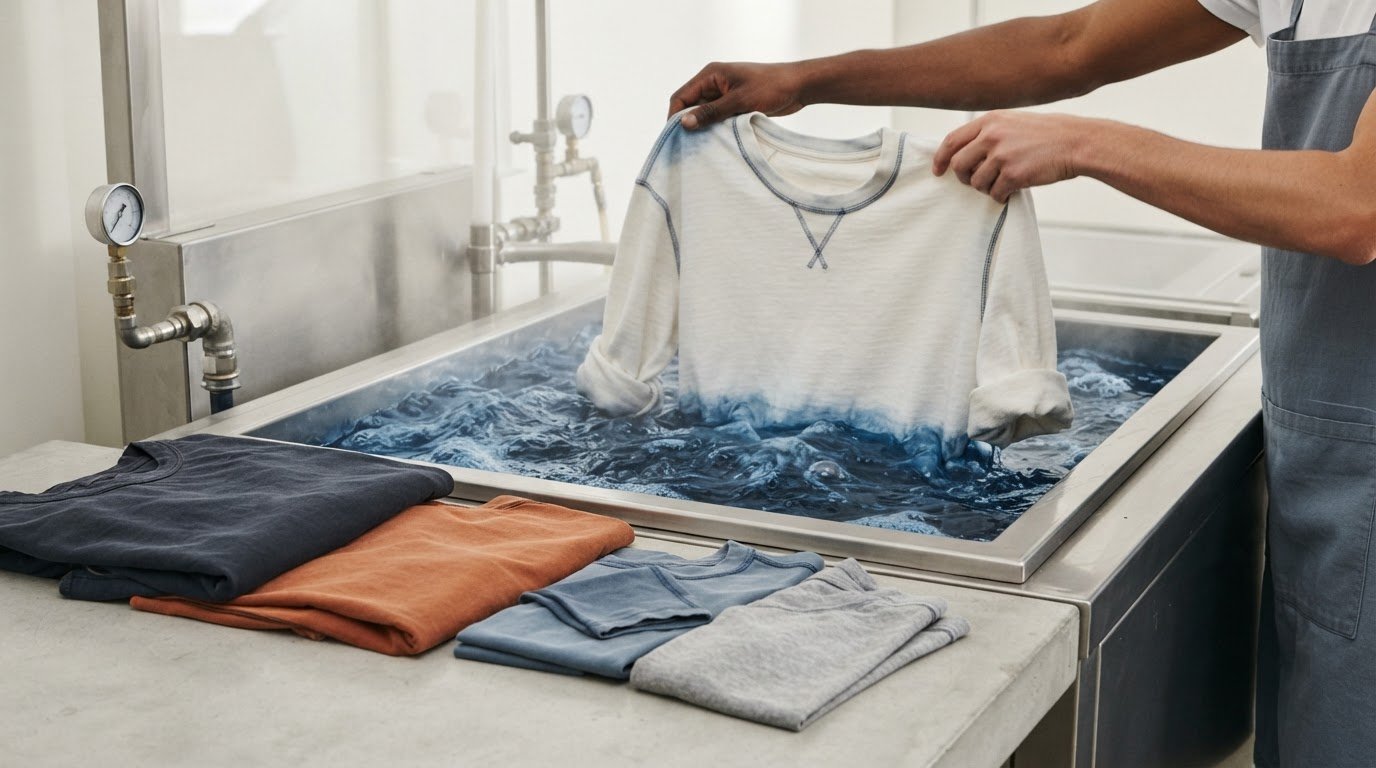
What if applying the same color at a different stage could change how a shirt looks and feels? If you’re asking what is garment-dyed fabric, the key difference is timing: the finished, sewn garment is dyed rather than dyeing the fabric before it’s cut and assembled.
This process can create a softer hand and a lived-in appearance, with color settling differently around seams or collars. It can also lead to slight shade variation between garments, so the finish may look less uniform than fabric dyed in a roll. Those details matter when you’re comparing blank apparel or planning a decoration project.
This guide explains how garment dyeing works, how it compares with piece dyeing, and which appearance and care characteristics to consider. You’ll also learn what to assess for shade consistency and decoration, including screen printing, so you can choose blanks with realistic expectations for your brand or project.
Key Takeaways
- Learn what is garment-dyed fabric and why the term describes when dye is applied, not a fiber type or quality grade.
- See how seams, folds, and other construction details can influence a garment’s visible color.
- Compare garment dyeing with piece dyeing to match the method to your desired appearance and production needs.
- Use fiber content, shade requirements, care guidance, and decoration plans to assess whether a garment suits your project.
- Choose wholesale blank apparel with its intended use and customization in mind, then factor screen printing or embroidery into the plan.
What Is Garment-Dyed Fabric? A Clear Definition
The answer to what is garment-dyed fabric is simple: dye is applied after the garment has been constructed. The fabric is cut and sewn first, then the assembled piece is colored. The term describes a production stage, not a fiber type or guaranteed quality level. A garment-dyed item can be made from different fibers, and its feel, durability, and color depend on its materials and processing.
What happens during garment dyeing?
Finished or assembled garments are prepared for processing and placed in a dye bath. The dye and conditions are selected to suit the garment’s fiber content and construction. There isn’t one universal recipe: fibers respond to dyes differently, and manufacturers may use different processing and finishing methods. An overview of textile color processes is available from Dyeing – Wikipedia.
Because the item is already sewn, dye reaches the garment as a complete piece. That’s the key distinction from coloring fabric earlier in production. The method alone doesn’t promise a particular shade, softness, or quality grade. Those depend on the materials, dye system, and finishing choices.
Garment-dyed versus piece-dyed fabric
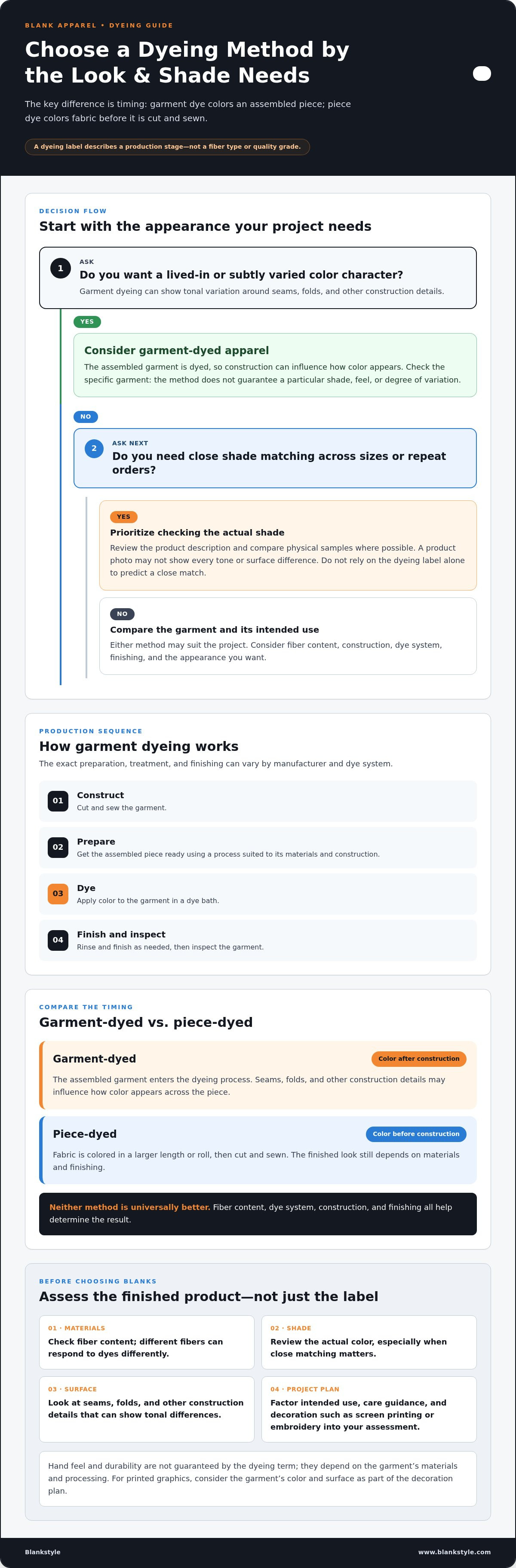
Piece-dyed fabric is colored before it’s cut and sewn into garments. With garment dyeing, color is introduced after construction. This difference affects when color enters production, but it doesn’t mean one method is universally better.
- Garment-dyed: The assembled garment enters the dyeing process. Seams, folds, and construction can influence how color appears across the finished piece.
- Piece-dyed: Fabric is colored in a larger length or roll, then cut and sewn. Color is applied before garment construction.
Both methods can produce different results depending on fiber content, dye system, and finishing. You can’t determine a garment’s final appearance from the dyeing label alone. When choosing blank apparel, treat the term as one useful production detail, then assess the specific garment and its intended use.
How Garment Dyeing Works and Why the Fabric Can Look Different
Garment dyeing starts with an assembled blank, but the exact preparation and treatment depend on the garment. A broad sequence looks like this:
- Construct: Cut and sew the garment.
- Prepare: Get the assembled piece ready for dyeing with a process suited to its materials and construction.
- Dye: Apply color to the garment in a dye bath.
- Finish and inspect: Rinse and finish as needed, then inspect the garment. These steps vary by manufacturer and dye system.
There’s no single temperature, dye recipe, or finishing sequence that applies to every blank. For more on garment-dyeing methods and process considerations, see Fibre2Fashion’s Dyeing of Garments: An Overview.
Why shades and surface character can vary
Garment dyeing can create tonal variation because fibers, seams, folds, and dye conditions don’t all interact with color in the same way. Fiber content matters: different fibers absorb or respond to dyes differently, so don’t assume a cotton garment and a blend will take color alike. Dye chemistry and finishing also influence the result.
Construction adds another factor. Stitching, seams, hems, and areas folded during processing can show color differently from broad, flat panels. This may contribute to a garment’s intended lived-in or dimensional look. It doesn’t mean every irregularity is intentional or that every piece will show the same variation.
That distinction helps explain what is garment-dyed fabric in practice: the method shapes how color is applied, but the materials and process determine how it looks. If a project needs close shade matching across sizes or repeat orders, review the product description and compare physical samples where possible. A product photo can help with initial selection, but may not show every shift in tone or surface character.
For a project built around printed graphics, consider the garment’s color and surface as part of the decoration plan. Browse wholesale blank T-shirts as a starting point for comparing apparel options before planning customization.
Garment-Dyed vs. Piece-Dyed: Which Method Fits Your Apparel Project?
Both methods color apparel at different points in production. That timing can influence appearance and planning, but it doesn’t make one method automatically better. Choose based on the look you want, the garment itself, and how closely colors need to match across an order or future reorders.
| Consideration | Garment-dyed | Piece-dyed |
|---|---|---|
| When color is applied | After the garment has been constructed | To fabric before cutting and sewing |
| Possible appearance | Color may show tonal character around seams, folds, or other construction details | Color is applied to the fabric before it becomes a garment; the finished look still depends on materials and finishing |
| Project consideration | Assess the finished garment and its shade as a whole | Consider fabric-level color needs alongside garment construction and finishing |
What differences may show up in appearance and feel?
A garment-dyed piece may have a lived-in or subtly varied color character, but the result isn’t guaranteed by the label. Fiber content, construction, dye system, and finishing all affect what you see. Hand feel also depends on factors such as fiber, knit structure, fabric weight, and finishing. Treat texture and color as product traits to assess, not assumptions based only on the dyeing term.
For example, two garments described as garment-dyed may still differ in shade or feel if their materials and construction differ. Product descriptions and physical samples can help you evaluate the specific blank rather than relying on the process name alone.
When should a buyer compare dye methods?
Consider garment-dyed apparel if the intended look depends on color being applied to the constructed piece. Consider piece-dyed options if fabric-level shade consistency is a priority in your production plan. Neither choice guarantees an exact match across garments, batches, or repeat orders.
Plan for shade matching early. Compare product details, evaluate samples where possible, and account for how the garments will be used and decorated. If future reorders need to coordinate with an existing run, keep reference garments or color samples for comparison while allowing for possible variation. The practical question isn’t simply what is garment-dyed fabric, but whether the garment’s actual color, hand feel, and construction fit your project requirements.
How to Choose, Care for, and Decorate Garment-Dyed Apparel
Use the garment’s actual specifications to guide your decision. The term garment-dyed tells you when color was applied, but it doesn’t tell you whether a particular blank suits your fit, use, care, or decoration requirements.
A practical checklist before selecting blanks
- Fiber content: Check the listed fibers. Different materials can respond differently to dye and decoration.
- Product details: Review garment weight, knit, fit, and construction. Don’t assume blanks with the same dye description will feel or perform alike.
- Shade needs: Decide whether slight color variation is acceptable or whether the project needs close matching across multiple garments or future orders.
- Intended use: Match the garment’s weight, fit, and color to how it will be worn.
- Decoration plan: Factor in artwork, placement, and the garment surface before choosing a printing approach.
If you’re still asking what is garment-dyed fabric when choosing blanks, focus on the specific item rather than relying on the label alone. Product descriptions and samples can help you assess the color and fabric for your project.
Care and printing considerations
Care instructions vary by garment. Follow the care label or product guidance rather than applying a universal wash temperature or routine. This matters when selecting apparel for a project where the finished garment’s appearance and care expectations are important.
For printing, review the blank’s specifications and decoration requirements before production. Print results depend on the garment materials, ink, artwork, and production settings. If the shade or surface character is important to the finished design, test the decoration on a sample first. This gives you a practical way to assess how the artwork and garment look together before committing to a larger run.
For help planning a print project, explore custom screen printing services. Once your garment, shade, and decoration needs are clear, browse wholesale blank apparel as a starting point for your project.
Finding Garment-Dyed Blanks for Your Apparel Line
Finding the right blank starts with three steps: understand when the dye is applied, assess the specific garment, then match its characteristics to your project. The term garment-dyed describes a production stage, but it doesn’t replace reviewing the product details that affect fit, color, feel, and decoration.
Match garment characteristics to the brand brief
Turn your creative brief into practical selection criteria. If the design calls for a particular color character, compare the garment’s actual shade and surface rather than relying on the dyeing term alone. Consider weight and fit alongside color, since each affects how the apparel suits your brand and intended use.
For repeat orders, document the product details and keep a sample or color reference where possible. This gives your team a consistent basis for comparison while recognizing that shade expectations should be product-specific. Browse the Comfort Colors apparel selection as one path for exploring blank options, then assess the details of the individual garment for your project.
Plan blank apparel and decoration together
Choose the blank and decoration approach as connected production decisions. A garment’s fiber content, color, and surface can all affect how a design appears. Review product specifications alongside artwork, placement, and intended decoration method before planning a production run. If the print or shade is central to the design, evaluating a sample can help you see how those choices work together.
Understanding what is garment-dyed fabric is a useful starting point, but the right selection depends on the finished apparel brief. Compare the garment’s specific characteristics with your color, fit, and decoration needs. For broader sourcing decisions, use a consistent checklist for product details, order use, and future reorders.
Once you’ve narrowed the project requirements, explore blank T-shirts as a practical starting point for planning your apparel line or customization project.
Choose Blanks That Fit Your Next Apparel Project
Understanding what is garment-dyed fabric helps you compare blanks by more than color alone. The dyeing stage can influence a garment’s visible character, but fiber content, construction, and finishing also shape its look and feel. Review product details, consider your shade requirements, and plan decoration alongside the garment choice.
For brands and creators, wholesale blanks provide a practical starting point for customization. Blankstyle offers wholesale blank apparel, along with custom screen printing and embroidery services for apparel projects.
Ready to put your plans into action? Explore blank T-shirts for your next apparel project, and match the garment, design, and intended use.
Frequently Asked Questions
What is garment-dyed fabric?
Garment-dyed fabric is material colored after it has been cut and sewn into a finished or assembled garment. The dyeing stage may affect the garment’s visible color character, including how color appears around seams and folds. The term doesn’t identify a specific fiber or guarantee a particular quality, feel, or shade. Check the individual garment’s fiber content and product details when choosing blanks for a project.
What is the difference between garment-dyed and piece-dyed clothing?
Garment-dyed clothing is colored after construction, while piece-dyed clothing is made from fabric that was dyed before cutting and sewing. The timing of dye application is the main distinction. Garment construction may influence visible color character, while piece-dyed fabric is colored before it becomes a garment. Final appearance depends on the fibers, dye system, and finishing, so compare specific products rather than relying on the method alone.
Is garment-dyed clothing softer?
Not necessarily. A garment may feel soft or broken-in after dyeing and finishing, but garment dyeing alone doesn’t guarantee a particular hand feel. Fiber content, knit structure, fabric weight, and finishing all contribute to texture. Compare product specifications and, if feel matters to your project, assess a sample. The dyeing label is useful process information, not a substitute for evaluating the finished garment.
Does garment-dyed fabric fade or shrink?
Garment-dyed fabric may change in appearance with wear and washing, but the amount of fading depends on the garment’s materials, dye system, finishing, and care. Shrinkage also varies by fiber and construction. Because the garment is processed after assembly, some shrinkage may occur during manufacturing, but the term doesn’t guarantee a specific result. Follow the product’s care instructions and review its specifications for project planning.
Can you screen print on garment-dyed shirts?
Yes, garment-dyed shirts can be screen printed, but results depend on the blank’s materials and surface, the ink, artwork, and production settings. Before a larger run, review the garment specifications and decoration requirements together. Testing the design on a sample is a practical way to assess color contrast, print appearance, and how the decoration works with the garment’s surface before production.
How should you wash garment-dyed clothing?
Follow the care label or product guidance for the specific garment. Washing instructions can vary with fiber content, construction, dye system, and finishing, so there isn’t one temperature or routine that applies to every garment-dyed item. If you’re sourcing blanks for a brand or merchandise project, include care guidance in your product planning so customers have clear, garment-specific instructions after purchase.
Is garment-dyed fabric better than piece-dyed fabric?
Neither method is universally better. Garment dyeing may suit a project that calls for color applied to the assembled garment, while piece-dyed options may fit plans that prioritize fabric-level shade consistency. Both methods can produce different results depending on materials and finishing. Choose based on the desired appearance, product specifications, intended use, and shade requirements, especially when planning repeat orders or matching several garments.
Ready to source blanks for your project? Explore wholesale blank T-shirts at Blankstyle and plan your garment and decoration together.