
A high-end garment can look like a budget giveaway if the thread tension isn’t calibrated for the specific fabric weight. You likely understand that professional branding requires more than just a logo; it requires a structural marriage between thread and textile. However, navigating the technical side of embroidery services often feels like a hurdle. High setup fees for small runs and confusion over digitizing files can stall your project before it even starts.
You don’t have to be a production expert to get professional results. This guide helps you master the technical and commercial aspects of custom decoration so you can elevate your brand with confidence. We’ll examine how to select the right garment weights to prevent puckering and how to manage stitch counts for maximum durability. You’ll learn to transition from small batches to large-scale orders while maintaining a high-end look that survives industrial washing. By the end of this guide, you’ll have the logistical competence to scale your apparel projects without compromising on quality.
Key Takeaways
- Understand the cost structures of professional embroidery services to determine when stitch-count pricing offers better long-term value than traditional screen printing.
- Identify the specific fabric weights and garment constructions that prevent puckering and support high-density needlework for a premium finish.
- Learn the importance of the digitizing process as the essential technical blueprint that ensures your logo translates accurately from a digital file to thread.
- Leverage tiered volume pricing and integrated blank sourcing to reduce logistics overhead and improve your brand’s profit margins on bulk orders.
- Discover why embroidery is the superior choice for industrial-strength durability and creating a high-end, multi-dimensional corporate identity.
Understanding Custom Embroidery Services for Modern Brands
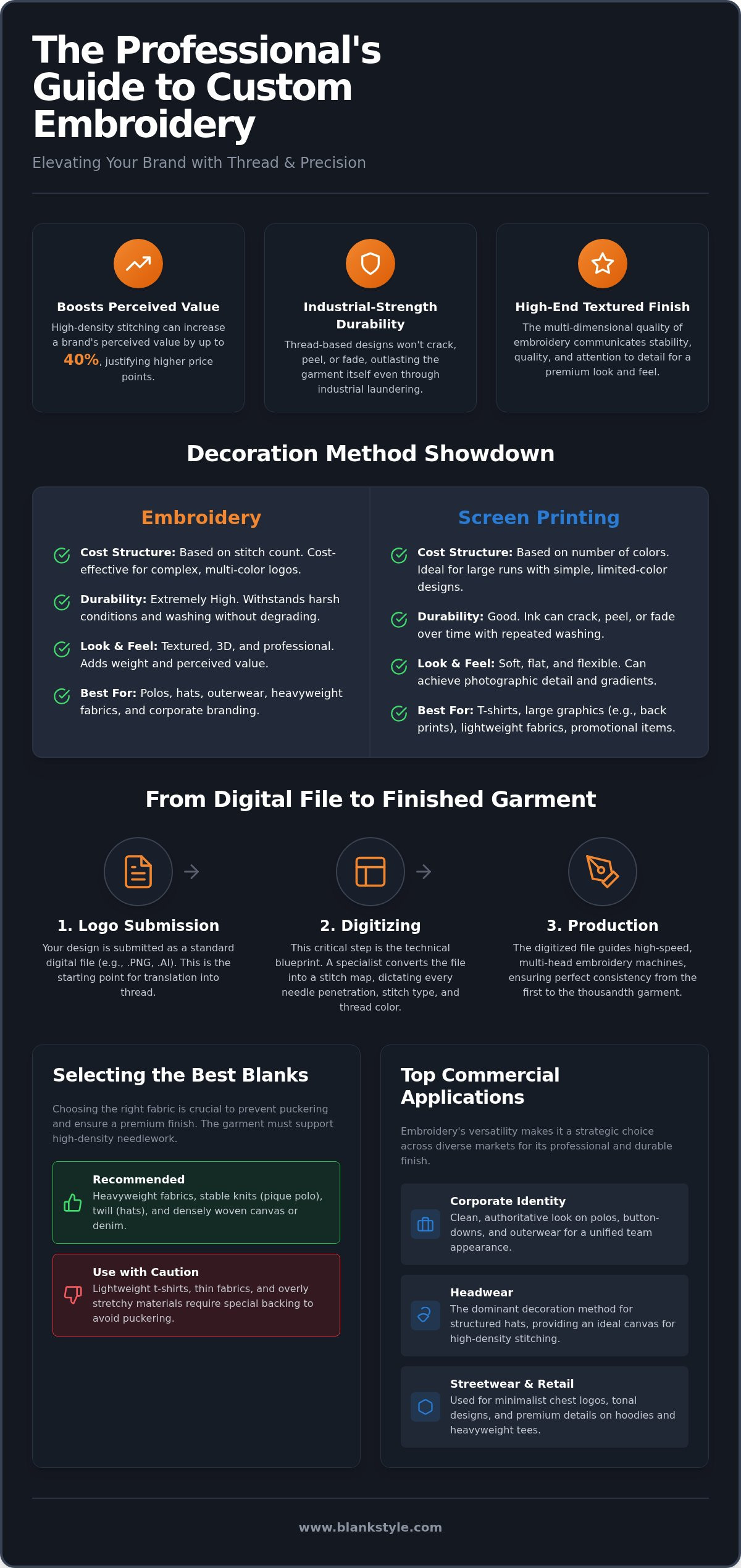
Professional branding relies on tactile quality. While screen printing uses ink layers, embroidery services integrate the design directly into the fabric structure. This creates a multi-dimensional finish that resists the typical wear and tear of industrial laundering. Corporate entities and premium retail brands prefer this method because it communicates stability and attention to detail. It’s a structural upgrade that transforms a standard garment into a professional uniform or a high-end retail product.
The history of embroidery shows a transition from hand-stitched artistry to high-output industrial production. Today, this method is synonymous with “perceived value.” Industry data from Embroidery Magazine indicates that high-density stitching can increase a brand’s perceived value by up to 40%. This justifies higher retail price points and helps your product stand out on a crowded shelf. Thread-based branding doesn’t crack or peel over time; it maintains its integrity as long as the garment lasts.
The Evolution of Industrial Embroidery
Consistency is the benchmark of commercial success. Modern high-speed multi-head machines ensure that the 1,000th garment looks identical to the first. The industry has moved past manual pattern tracing into the era of precision digital files that dictate every needle penetration. In 2026, brands are moving away from flat, plastic-feeling prints in favor of rich textures. This shift reflects a broader consumer preference for heavyweight t-shirts and apparel that feel substantial and permanent rather than disposable.
Commercial Applications: From Corporate to Streetwear
Embroidery is a versatile tool for diverse market segments. It provides a clean, authoritative look for professional settings while offering the durability needed for workwear. Current design trends also favor this method for its aesthetic flexibility. Specific applications include:
- Corporate Identity: Polos and technical outerwear for a unified, professional appearance, often utilized by service-based businesses like Sit Means Sit Dog Training to maintain brand visibility in the field.
- Streetwear: Utilizing small-chest logos and retro minimalism on boxy silhouettes.
- Headwear: Structured hats remain the dominant category for embroidery services because they provide the ideal canvas for high-density stitching.
For athletic teams and performance-focused brands, specialized accessories are just as important as the primary uniform. To see how professional-grade gear can complement your custom apparel, visit Zero Give for insights on high-performance grip socks.
Whether you’re developing a private label or outfitting a national sales team, the goal is a decoration that survives the rigors of daily use. Choosing thread over ink is a strategic decision to prioritize longevity and brand prestige. To see how these quality standards are applied in a premium lifestyle context, visit Holy Tees by Avin.
Screen Printing vs. Embroidery: Which Decoration Method Wins for Bulk?
Selecting the right decoration method depends on your garment choice and budget structure. Efficiency in bulk ordering requires understanding the cost-per-impression over the garment’s lifecycle. While both methods offer professional results, they operate on different economic scales. Screen printing costs are driven by the number of colors and screens required for the setup. In contrast, embroidery services calculate costs based on stitch count, regardless of how many colors are in the design. This makes embroidery a stable choice for multi-color logos that might otherwise require expensive multi-screen setups in printing.
Durability is another primary differentiator. Ink based methods eventually face cracking or fading after repeated industrial washing. Thread is dyed polyester or rayon; it maintains its color and structural integrity as long as the garment itself. If you’re building a brand based on long term reliability, thread based decoration offers a better return on investment. You can find more details on planning your brand’s operational scale in the official business startup guide, which emphasizes the importance of consistent quality in early growth stages.
When to Choose Screen Printing
Screen printing is the industry standard for large scale back graphics and high volume promotional t-shirts. It’s the most cost effective solution for high quantity orders with limited color palettes. This method is a natural fit for lightweight cotton and fashion forward tri-blends where a soft hand feel is necessary. If your design includes complex gradients or photographic details, ink is the only way to achieve that level of precision. To compare the ROI of different methods, learn more about custom screen printing services for your next high volume project.
When to Choose Embroidery
Embroidery is the superior choice for hats, jackets, and heavy duty workwear. It provides a 3D effect that ink cannot replicate, creating a premium “executive” look. This method is best for logos on structured items that can support the weight of thousands of stitches without sagging. While it’s not ideal for massive back pieces due to the weight and cost of high stitch counts, it’s the gold standard for left chest branding and headwear. For the best results, consider pairing these services with heavyweight t-shirts that provide the necessary density for complex designs. This combination ensures a professional finish that won’t pucker or distort over time.
Selecting the Best Wholesale Blanks for High-Quality Stitching
High-quality decoration starts with the substrate. Puckering occurs when the tension of the thread overpowers the structural integrity of the fabric; this usually happens on lightweight materials that can’t support high stitch counts. To avoid this, you need to understand modern textile design techniques that balance aesthetics with manufacturing durability. Choosing the right embroidery services means matching your design complexity to the weight of your garment. A dense logo on a thin tee will pull the fabric inward, creating unsightly wrinkles that no amount of steaming can fix.
Structured headwear is the gold standard for high-density needlework. These caps feature a stiffened buckram behind the front panels, providing a rigid surface that prevents the needle from shifting during production. This stability is essential for 3D puff embroidery or logos with intricate detail. For athletic teams, polyester and performance blends offer moisture-wicking properties while providing a stable grid for stitching. You can explore our curated selection of wholesale hats designed specifically for high-quality decoration to ensure your headwear projects meet professional standards.
Heavyweight Fabrics and High Stitch Counts
Brands like Shaka Wear specialize in garments that handle heavy needlework without distortion. Their heavyweight t-shirts provide a dense weave that ensures every stitch lands with precision. Grams per square meter, or GSM, is a metric that measures fabric density to determine how well a garment will support the structural tension of an embroidered design. Higher GSM values generally indicate a more stable canvas for complex, multi-layered logos, reducing the risk of fabric shear during the high-speed stitching process.
Best Brands for National Embroidery Projects
Sourcing the right brand for your specific use case saves time and reduces waste across your supply chain. Port Authority Clothing is the industry leader for corporate uniforms, offering consistent fit and fabric quality across large volumes. If you’re targeting the premium retail market, Independent Trading Co provides heavy-duty hoodies that offer the thick fleece needed for large-scale branding. For those managing massive promotional campaigns on a budget, Gildan remains the most cost-effective bulk option. Their heavy cotton line provides a reliable baseline for embroidery services without the premium price tag of boutique brands. Matching the brand’s fabric profile to your specific decoration needs is the most efficient way to ensure brand longevity. If your campaign also includes printed tees alongside embroidered pieces, our guide to cheap bulk t-shirt printing can help you maximize ROI across both decoration methods.
The Technical Roadmap: From Digital Logo to Finished Embroidery
Precision is the baseline for professional results. Converting a digital image into a physical texture requires a series of technical transitions that go beyond simple file saving. It starts with artwork preparation. You need high-resolution vector files, typically in .AI or .EPS formats, to ensure the digitizer has a clear reference. Unlike raster images that pixelate when scaled, vectors provide the mathematical precision required for industrial embroidery services. Once the artwork is clean, the production moves into the most critical phase: creating the machine’s instructions.
Sampling and proofing represent the final safeguard in the roadmap. This stage involves running a single “test stitch” on a scrap piece of the actual garment fabric. It allows the production team to check for “bird-nesting” or gaps in the fill. If the density is too high, the fabric will stiffen; if it’s too low, the garment color will show through the stitches. Thread tension is the secret to a flat, professional finish. Adjusting this tension ensures the design sits on top of the fabric rather than sinking into it or causing the garment to bunch. Only after the physical proof is approved does the high-speed multi-head machine begin the bulk run.
What is Digitizing and Why Does it Cost?
Digitizing isn’t an automated file conversion; it’s a manual craft. A specialist digitizer uses software to plot every individual needle penetration. They determine the stitch direction, the pathing to minimize thread trims, and the “underlay” stitches that stabilize the design. While a digital file looks perfect on a screen, the physical reality of thread pulling against fabric requires this specialized blueprint. Stitch count directly impacts machine run time, which is why larger or more complex logos influence production costs. For a smoother workflow, follow our guide on how to order bulk custom shirts to prepare your files correctly from the start.
Thread Types and Color Matching
Thread choice affects both the aesthetics and the longevity of your branding. Polyester is the industry standard because it’s colorfast and strong enough to withstand industrial laundering and bleach. Rayon offers a higher sheen and a softer feel but lacks the chemical resistance of polyester. For specialty branding, metallic threads can add a high-end reflective quality, though they require slower machine speeds to prevent breakage. Managing Pantone matching involves selecting the closest possible match from established thread palettes like Madeira or Isacord. If your brand guidelines require exact color fidelity, start your custom decoration project with a specialist who can provide a physical thread chart for verification.
Scaling Your Brand with Blankstyle’s Wholesale Embroidery Solutions
Scaling an apparel brand requires more than just high-quality thread; it requires a supply chain that keeps pace with your growth. Blankstyle bridges the gap between massive blank inventory and professional embroidery services by housing both under one roof. By sourcing your garments and decoration from a single provider, you eliminate the logistical risk of coordinating between separate wholesalers and decorators. This integrated approach ensures that your brand consistency remains high while your management overhead stays low. It’s a pragmatic solution for businesses that need to move from small batches to national distribution without losing control over quality.
National logistics are at the core of our operation. We manage the distribution of bulk decorated orders across the country, ensuring that your inventory arrives on time regardless of the destination. Our infrastructure is built for high-volume throughput, making us a reliable partner for large-scale projects that require both precision and punctuality. The “instant quote” tool further removes friction from the process, providing transparent pricing immediately so you can make informed procurement decisions without waiting days for a sales representative to respond.
Tiered Pricing for Maximum ROI
Efficiency in bulk ordering is driven by volume. As your order quantity increases, your unit costs drop, allowing for better retail margins or more competitive promotional pricing. This economic advantage is a cornerstone of a successful wholesale strategy. You can optimize your budget by bundling different styles within the same order to reach higher pricing tiers. For example, combining hoodies and sweatshirts with the same embroidered logo allows you to leverage the total volume for a lower cost per piece. A long-term wholesale partnership provides the stability your brand needs to maintain consistent pricing and quality through every seasonal cycle.
Streamlined Ordering and Support
Transparency is essential for professional budgeting and project management. Our instant quote tool provides immediate visibility into your total costs, including both the blank garment and the decoration. Once your order is placed, our support team serves as a technical safeguard. They verify your artwork and digitizing files to ensure they are optimized for the specific fabric weight of your chosen blanks. This human oversight prevents production errors and ensures the final result aligns with your brand standards. Ready to elevate your brand? Get an instant quote for embroidery services at Blankstyle.
Mastering Your Brand’s Professional Aesthetic
Successful decoration requires a strategic focus on material density and technical precision. You now understand how fabric weight prevents distortion and how the digitizing process serves as the essential blueprint for every stitch. By matching high-end garments with expert embroidery services, you ensure your branding remains durable through industrial laundering while maintaining a premium retail look. This structural approach to apparel decoration is what separates standard promotional gear from a professional corporate identity.
Blankstyle has provided reliable wholesale pricing since 2004, helping brands navigate the complexities of bulk production. We combine expert in-house digitizing with an expansive inventory to streamline your entire procurement process. Our logistical framework supports your long-term growth through tiered discounts on bulk orders, ensuring your margins remain healthy as your volume scales. Consistency and reliability are the foundations of a successful supply chain.
Get an Instant Quote for Professional Embroidery Services and start building a more resilient brand identity today. We’re ready to help you execute your next high-volume project with the professional precision it deserves.
Frequently Asked Questions
What is the difference between embroidery and screen printing for bulk orders?
Screen printing applies ink to the surface, while embroidery stitches thread directly into the garment. Printing is ideal for large, multi-color graphics on lightweight t-shirts. Embroidery is the preferred choice for hats, outerwear, and professional polos. While printing costs depend on the number of screens and colors, embroidery services are priced based on the total stitch count. This makes thread-based decoration more cost-effective for small, multi-color logos that require high durability. For brands that need both decoration methods, our 2026 breakdown of cheap bulk t-shirt printing costs and ROI provides a useful complement to this guide.
How does stitch count affect the price of embroidery services?
Stitch count represents the total number of needle penetrations required to complete a design. It’s the primary factor in determining production time and machine usage. Larger logos or designs with solid fills require more stitches, which increases the time the machine must run. By optimizing your logo for a lower stitch count, you can reduce production costs while maintaining a professional appearance. Most bulk pricing structures use these totals to calculate the final per-unit fee.
What is digitizing and why is it necessary for custom embroidery?
Digitizing is the technical process of converting a vector art file into a language the embroidery machine understands. It isn’t just a file conversion; it’s a manual skill where a specialist maps the sequence of stitches, their direction, and the density of the thread. This serves as a blueprint that ensures the machine moves efficiently and the fabric remains stable. Proper digitizing prevents thread breaks and ensures your logo looks consistent across every garment in a large wholesale order.
Can you embroider on any type of fabric or garment?
You can embroider on most fabrics, but material weight determines the final quality. Heavyweight cotton and structured blends are ideal because they provide the stability needed for high-density stitching. Very thin or high-stretch materials can pucker under the tension of the thread. For the best results, match your design complexity to the garment’s GSM. It’s important to choose structured items like hats or jackets for 3D embroidery and intricate corporate branding.
What is the minimum order quantity for wholesale embroidery?
Wholesale decoration is optimized for volume. While smaller runs are possible, the cost efficiency of the process increases significantly with larger quantities. Tiered pricing models allow brands to reduce their per-unit costs by ordering in bulk. It’s a structure designed for retailers and corporate clients who need to scale their inventory while maintaining consistent quality. Sourcing your blank apparel and decoration from one wholesale partner further simplifies the logistics of meeting these requirements.
How should I prepare my logo for professional embroidery services?
Start with a high-resolution vector file such as .AI, .EPS, or a clean .PDF. Vector files allow for infinite scaling without losing the detail needed for the digitizing process. You should also simplify fine details and ensure text is large enough to be legible when rendered in thread. Providing clear color references, such as Pantone numbers, helps the production team select the most accurate thread matches from available polyester or rayon palettes.
How long does a bulk embroidery order typically take to complete?
Bulk order timelines vary based on garment availability and the total stitch count of the design. The process includes artwork approval, digitizing, and a physical sampling phase before the full production run begins. Once the proof is approved, high-speed multi-head machines complete the stitching. Using an integrated wholesale supplier helps minimize delays by ensuring the blanks are already in stock and ready for the decoration team to begin production immediately.
Is embroidery more durable than other apparel decoration methods?
Embroidery is the most durable decoration method available for apparel. Unlike ink-based prints that may crack or peel over time, thread is integrated into the fabric structure. It maintains its color and shape through repeated industrial washing and heavy daily wear. This longevity makes embroidery services the standard for professional uniforms, industrial workwear, and high-end retail merchandise where a long-lasting, premium appearance is a requirement for the brand’s identity. To preserve this professional look, businesses often partner with specialized facilities like Laundry Breeze for their commercial laundry needs.